What drives the interval
A ventilation system gets dirty from whatever it extracts. In an office that is dust and skin cells, which accumulate slowly. In a kitchen it is grease aerosol, which coats the walls in weeks. In a factory, process contaminants are added on top.
- Offices, schools, office buildings — every 18–24 months
- Shopping centres, hotels, gyms — every 12–18 months
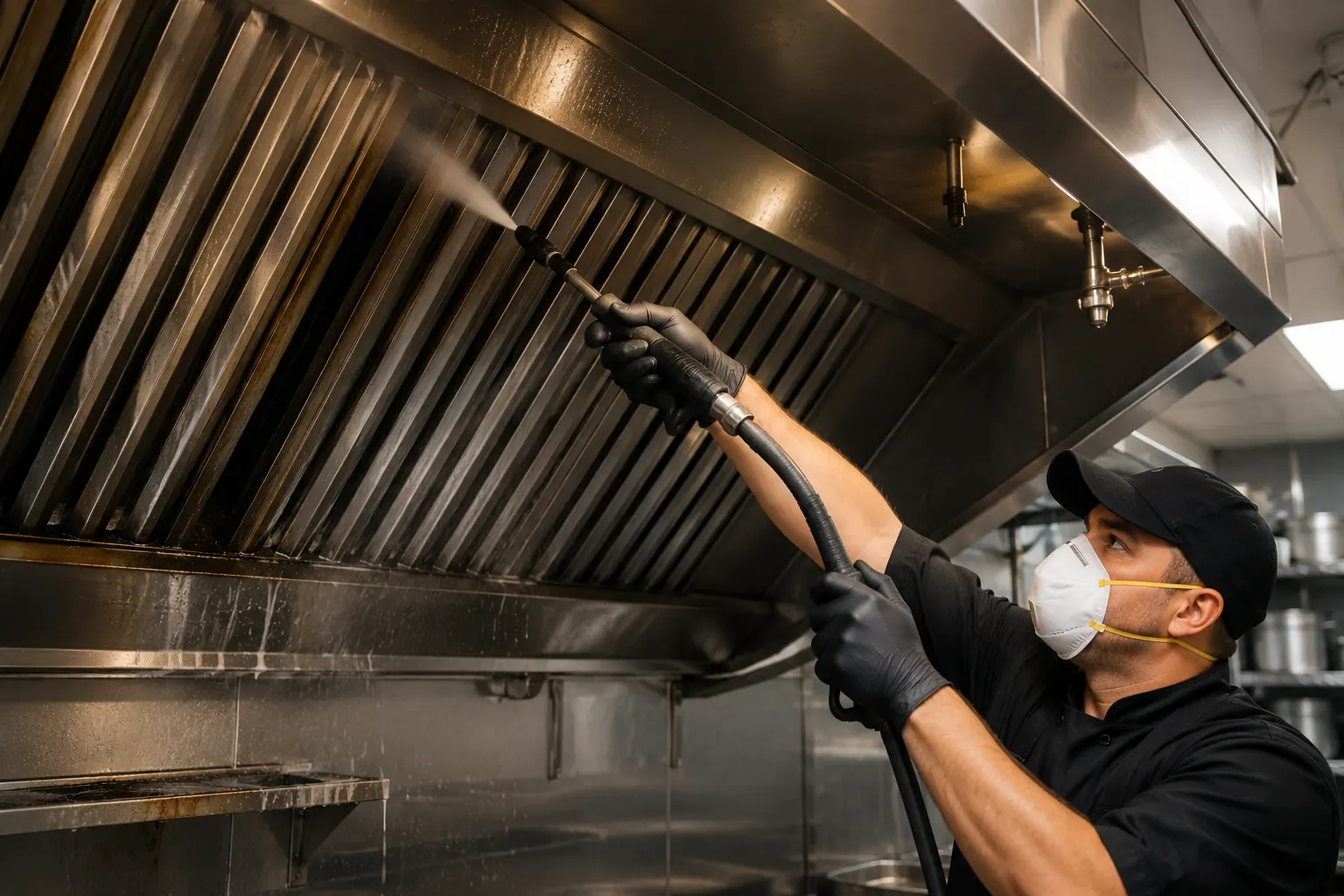
- Restaurant and kitchen extract — every 3–6 months
- Industrial extraction systems — several times a year
- Apartment ducts and refuse chutes — once or twice a year
Signs you should not wait
The schedule stops mattering once the symptoms appear. These usually come first:
- Visible dust on grilles and diffusers
- An odour that returns immediately after airing
- Weaker airflow than before, condensation on windows
- Staff complaining of dry air, headaches, allergies
- Energy consumption rising for no obvious reason
Why delay costs more
A fouled duct has a smaller cross-section, so the fan has to work harder to move the same volume of air. Energy consumption and wear on the equipment rise together.
In kitchen extract, waiting is also dangerous: the grease layer is combustible and is the most common cause of commercial kitchen fires. Insurers ask for evidence of regular maintenance in exactly those cases.
Setting an exact interval
There is no universal answer — the interval comes from a survey. The cheapest way to settle it without guessing is a camera inspection: it shows the real level of contamination in the ducts, and only then is it clear whether cleaning is needed now or can wait six months.
Request a quote
Question about your building? We reply within 24 hours.